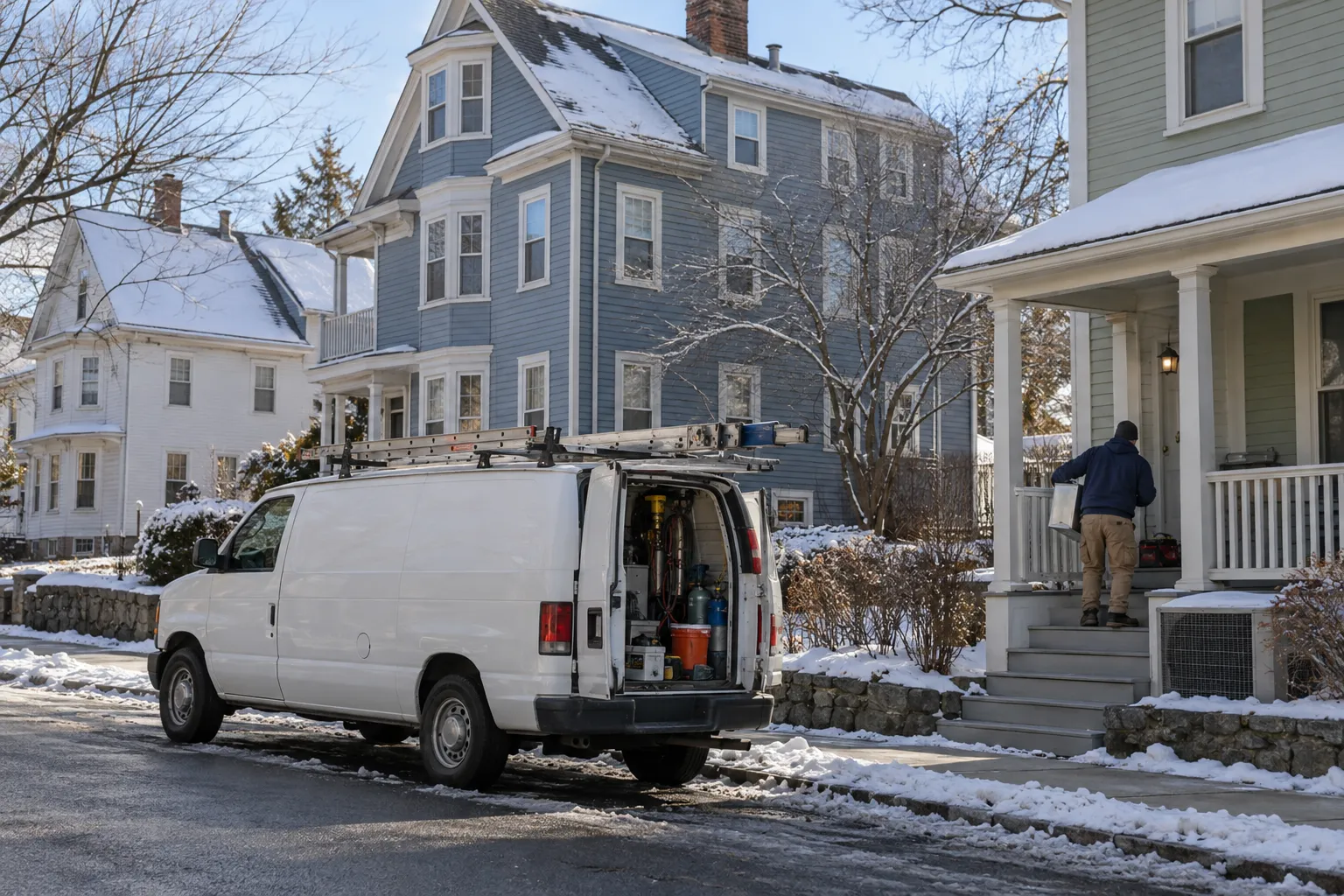
Need residential furnace repair in Phoenixville?
Tell us what your system is doing. Request a callback to check provider availability, or send a request and a local provider will follow up.
No obligationA furnace works like a quiet helper in the basement. It pulls in cool air, warms it, and sends it through the house all winter. When one small part tires out, the whole job gets harder. You might notice weak air from the vents, a new clicking sound, or rooms that never seem to warm up.
Italymo Heating & Air is a referral service. We do not repair furnaces. We explain what is likely going on, then connect you with an independent provider in our network who serves Phoenixville and the Phoenixville area. Many homes here are older, with full basements and long cold seasons, so heating and cooling systems work hard. Acting early keeps a small repair from turning into a bigger one.
Treat a gas smell like a smoke alarm. You do not hunt for the cause first. You get out first.
If you notice a rotten-egg odor or hear a hiss near the furnace, leave the house with everyone inside. Do not flip switches, light a flame, or use a phone indoors. Once you are outside, contact your gas utility or 911.
Move into fresh air and stay there. Headaches, dizziness, or feeling sick when the furnace runs are warning signs too. Let the utility or fire department clear the home before any provider works on the furnace.
A furnace is a bit like a car that sat in the driveway all summer. It looked fine, but the first frosty morning asks a lot of it. Dust, worn parts, and tired motors show up once the system has to run for hours.
Long cold spells keep a furnace running with hardly a rest. Spring snowmelt and coastal storms can bring damp air into basements, which is hard on circuit boards and vent pipes. Fix it small, and these seasonal stresses stay minor.
Think of this like making sure a lamp is plugged in before you buy a new bulb. A few simple steps can rule out easy causes.
Do not open the burner compartment or work on gas parts yourself.
Then the cause is likely inside the furnace. Request a callback to check provider availability and get pointed to someone who works on heating systems near you.
A furnace usually whispers before it shouts. Learning those whispers is like noticing your car pulling to one side before a tire goes flat.
Bangs, squeals, or rattling are worth attention. So is a burning smell that lasts more than the first run of the season. A furnace that turns on and off every few minutes is often struggling with airflow or a sensor.
Cape Cod styles, multi-family buildings, and homes with stone or block foundations often have long duct runs and drafty corners. If one room stays cold while another feels warm, the furnace, the ducts, or both may need a look.
A good visit works like a doctor's checkup. The provider asks questions first, then examines, then explains.
The provider listens to your description, checks the thermostat and safety controls, and watches the furnace go through its start-up. You should get a plain explanation of what failed and what it would take to fix.
Small fixes may be done during the visit. For larger repairs, ask for the quote in writing so you can compare it with the age of the furnace.
Most no-heat calls come down to a short list of parts, much like a flashlight that fails because of a bulb, a battery, or a switch.
Think of an old work boot. Resoling it once makes sense. Resoling it every winter does not.
The furnace is fairly young, the problem is one part, and the quote is small next to the cost of a new unit.
A cracked heat exchanger, repeat breakdowns, rising heating bills, or a unit that is well past typical age can point toward a new system. If you are searching furnace replacement near me, ask the provider to compare repair and replacement side by side.
A few plain questions keep the visit clear and calm.
The easiest furnace repair is the one done before the first hard frost. Like putting snow tires on in fall, a check-up while the weather is mild means fewer rushed decisions later.
Providers in our network often have more room in their schedules before the cold hits. Reach out when you first notice a change, and you give yourself time to compare options.
A provider looks at the burner, venting, and controls to confirm the furnace is running safely.
The provider traces the no-heat or weak-heat problem to the part that caused it.
Worn ignitors, sensors, motors, and switches can be repaired or replaced when the furnace allows.
You get a clear account of what failed, what it costs, and what choices you have.
Prices vary with the furnace, the part, and the home. These are typical U.S. ranges only. Ask any provider for a written quote before work begins so you know exactly what is covered.
| Repair item | Typical range | Notes |
|---|---|---|
| Thermostat repair or swap | $100 – $350 | Smart models cost more |
| Ignitor or flame sensor | $150 – $450 | Common no-heat cause |
| Blower motor | $400 – $1,500 | Depends on motor type |
| Inducer motor or pressure switch | $300 – $900 | Part of the exhaust system |
| Control board or gas valve | $300 – $1,000 | Varies by furnace brand |
| Heat exchanger repair | $1,500 – $3,500 | Often leads to a replacement talk |
If you smell gas or a carbon monoxide alarm sounds, go outside and contact the utility or 911.
Check the thermostat, breaker, filter, and vents to rule out easy fixes.
Request a callback or use the request form to be connected with a local provider.
Ask what failed, compare repair against replacement, and decide at your own pace.
One place to start means you spend less time scrolling and more time reaching a real provider.
Plain words about your furnace before you talk to anyone about work.
Local companies in our network do the work, not Italymo Heating & Air.
You can ask questions and compare quotes with no obligation to hire.
Tell us what your system is doing. Request a callback to check provider availability, or send a request and a local provider will follow up.
No obligationCommon causes include a dirty filter, a thermostat set wrong, a failed ignitor, or a blower problem. Try the simple checks first. If heat is still weak, a local provider can find the cause.
A brief dusty smell at first start-up can be normal. A gas or burning smell is not. Shut the furnace off, leave if you smell gas, and ask a provider to inspect it.
Look at its age, how often it breaks, and what the repair quote is. If repairs keep adding up, ask the provider for a written comparison with replacement.
Tell us what your system is doing. Request a callback to check provider availability, or send a request and a local provider will follow up.
No obligation